


The artist has given the full amount of his £25k Mercury Prize winnings to the Music Venues Trust, which functions to protect the UK's small concert spaces.
The star was awarded the cheque on 16 October as his latest record his work was declared the outstanding release of the past year.
He has opted to hand the money over to the MVT, in appreciation of the crucial part grassroots venues played in his early career.
"I would not have achieved this success if it weren't for all the performances I performed around the North East, and beyond, when I was just getting going," said the artist. "These spaces are legendary, but they are struggling."
Beginning in 2023, at least 150 of these locations have ceased operations – about 16% of the total UK scene.
Over the past year, major artists like the band Pulp, Coldplay, Katy Perry and Ed Sheeran have all aided the MVT in its initiatives to help venues survive, by including a modest fee to their ticket prices, which supports smaller concert halls.
Fender also took part, generating more than £100,000 on his live tour to help thirty-eight small stages across England, Scotland, and Wales.
The money helped locations that were facing potential shutdown due to challenges arising from floods, blazes and family tragedies, as well as permit problems, conflicts and noise complaints.
Other venues received funding support in modernizing infrastructure and sound and lighting systems that helped musicians and audiences.
"The notion that revenue from concerts in major spaces helps the smaller venues, where it kicks off for musicians like me, is just logical," the star has stated.
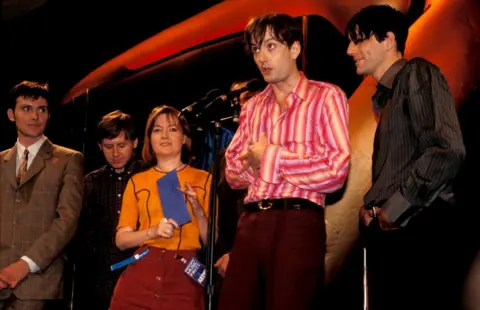
Fender is far from the only musician to donate his Mercury Prize funds to worthy causes.
Back when the band won the prize in the year 1996 for their record their work, vocalist Jarvis Cocker announced that the group would donate their cash to the non-profit the charity.
In 2002, artist she divided her prize across several organizations, like the NSPCC and a charity for Sickle Cell.
"I also gave a £1,000 to the center, to their classes, because I trained in gymnastics when I was a child and they lacked new equipment," the artist explained to a publication.
Previously, Ezra Collective donated their prize money to the local youth club that nurtured their act, as well as other grassroots music organisations.
And winners that year they gave their winnings to a charity for MS after a friend was identified with the disease.
"The victory was sufficient," stated artist Heather Small. "The money was the extra but we didn't require the bonus, because we had the cake. So our winning impacted the lives of others."
Recently, the Music Venues Trust revealed it had protected several small stages in that region, by transferring them to community ownership.
The Joiners in that area and The Croft in that location were bought under the community ownership program, which is supported by the arts council and enthusiasts who acquire "stakes" in the venues.


